
Start with the cause
Tenancy Services says tenants should keep a home aired and remove mould as it appears. Landlords remain responsible for keeping the property in a reasonable state of repair and meeting applicable healthy homes standards. Persistent damp can come from leaks, failed drainage, ventilation faults or other building issues that cleaning will not solve.
- Ordinary condensation or a small accessible surface mark: clean and record it
- Recurring damp or failed ventilation: report the maintenance issue
- Extensive growth or damaged material: stop and seek suitable advice
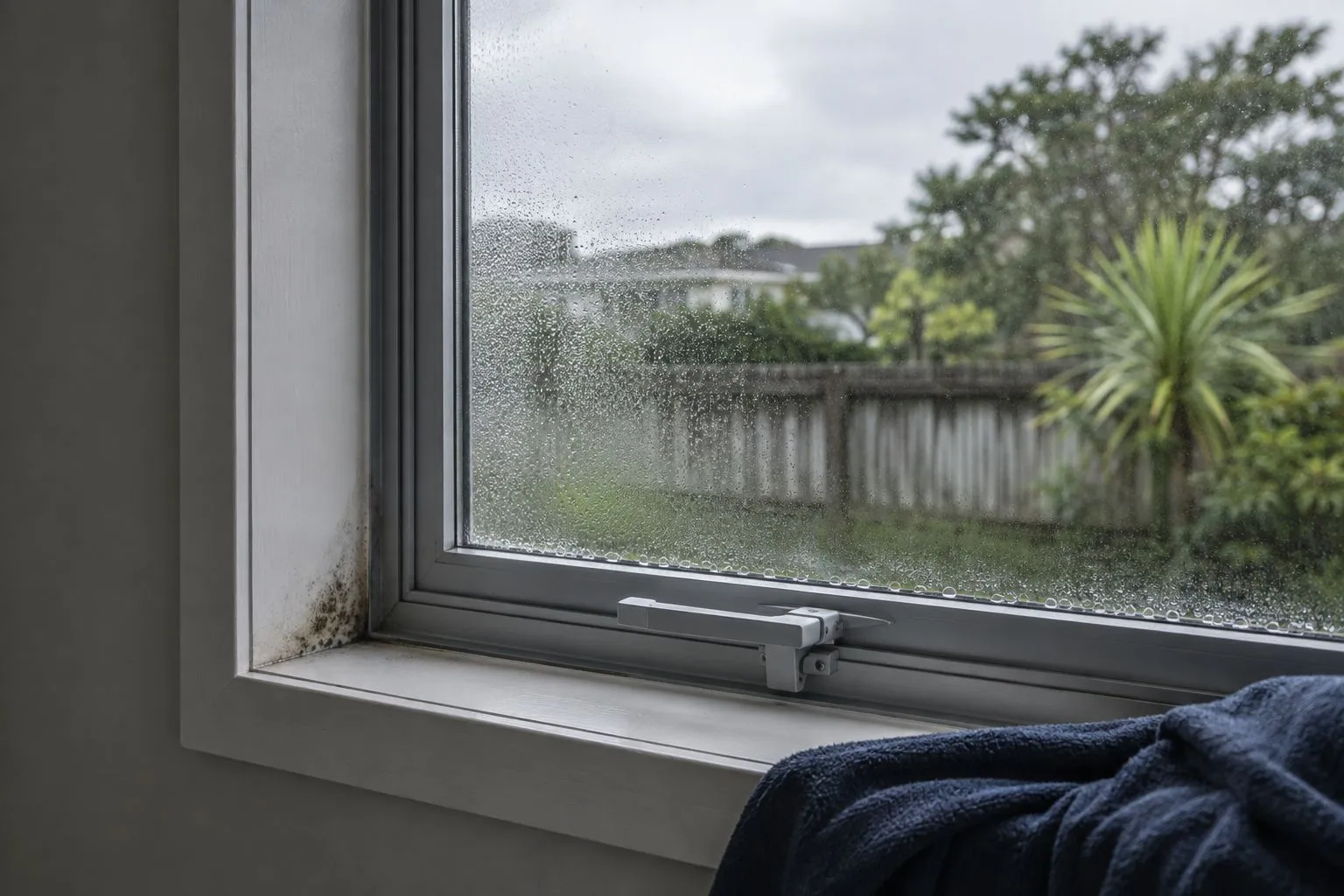
Document persistent problems
Photograph the affected area in context and close up. Keep messages showing when the issue was reported and any response. Note recurring condensation, leaks, failed extractor fans or damp patches. Reporting repairs early matters because hidden moisture can cause further damage.
- Use daylight where possible
- Record the room and date
- Keep repair requests in writing
- Do not paint over unexplained mould
Clean only where it is safe
For a small surface area, follow current Tenancy Services guidance and the product instructions. Ventilate, wear suitable gloves and eye protection, and never mix cleaning chemicals. Stop if the area is extensive, keeps returning, involves damaged material or cannot be reached safely. Specialist advice may be needed.
Before the final inspection
Wipe ordinary condensation, clean accessible affected surfaces where safe, and let the room dry. Photograph the final condition. Keep structural moisture, failed ventilation and repair items on a separate list so they are not presented as problems a routine cleaner could fix.
For tenancy responsibilities or disputes, check the facts of your case against current Tenancy Services guidance. View official maintenance guidance
Official sources
Legislation and government pages checked on 3 September 2026.