
The official standard covers the whole property
Tenancy Services describes the overall end condition as reasonably clean and tidy. It does not publish a separate pass-or-fail rule for ovens. Remove ordinary cooking residue, loose crumbs and grease from accessible interior and exterior surfaces without damaging the appliance.
Check the appliance before using products
Read the manufacturer's label if it is available. Self-cleaning liners, catalytic panels, aluminium trim, rubber seals and coated surfaces can react badly to strong chemicals or abrasive pads. Photograph cracked glass, a faulty element or existing corrosion. Report these as repairs instead of scrubbing them.
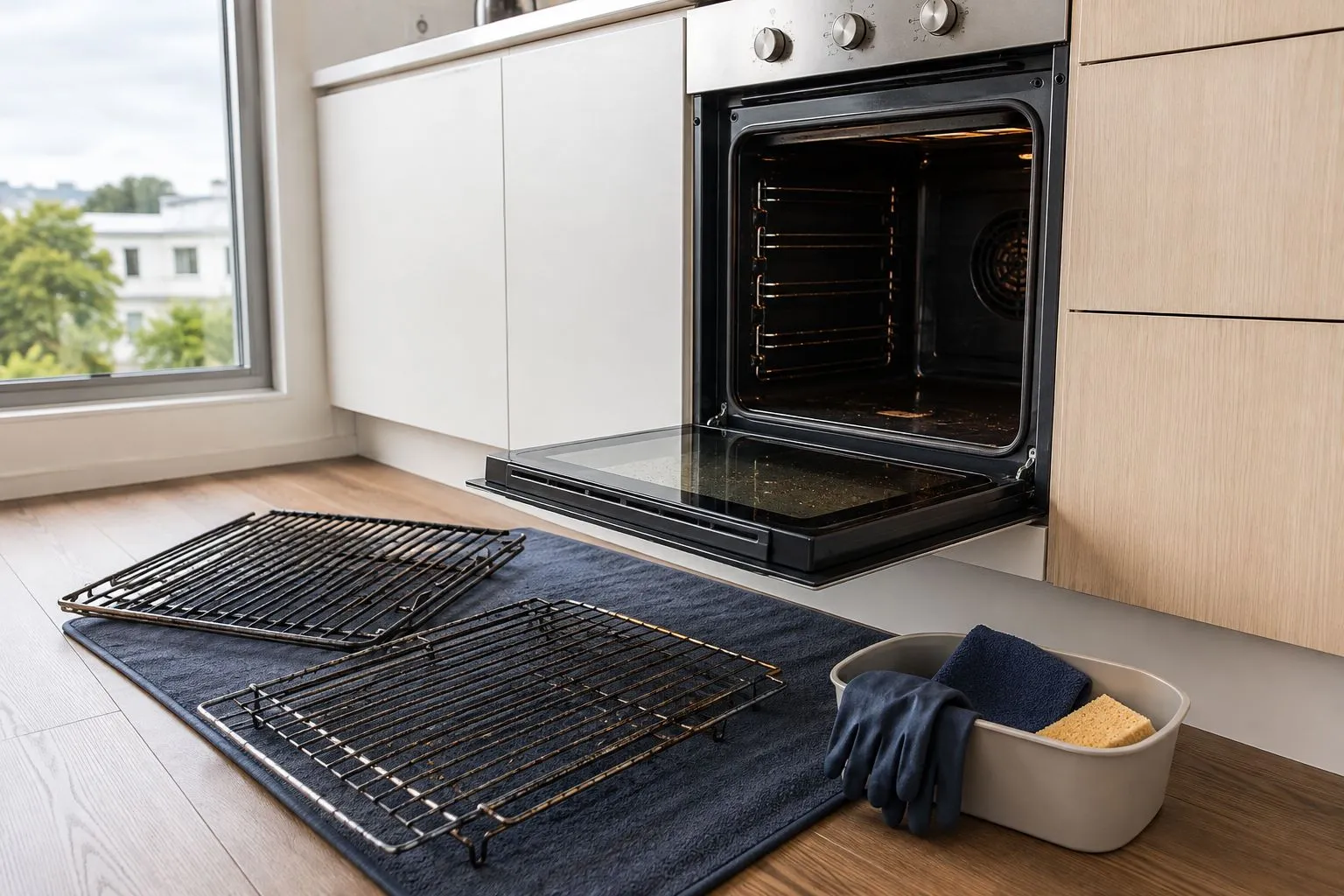
- Let the oven cool fully
- Confirm whether racks and trays can be removed
- Protect the floor and nearby cabinetry
- Ventilate the kitchen while products are used
Work through the visible areas
Remove loose debris first. Clean the racks, trays, internal glass and accessible cavity using products suitable for the materials. Wipe the control panel, handle and surrounding cabinetry last. After rinsing and drying, check for residue around hinges, corners and the lower edge of the door.
Tell the cleaner what to expect
Include the oven in the quote request and mention heavy carbon, grease, a double oven or a delicate finish. Leave power and water available unless the property manager has instructed otherwise. Record appliance damage and permanent staining separately; ordinary cleaning cannot repair them.
For tenancy responsibilities or disputes, check the facts of your case against current Tenancy Services guidance. View official maintenance guidance
Official sources
Legislation and government pages checked on 3 September 2026.